Gulen Schools Worldwide

Restore the Ottoman Caliphate. Disclaimer: if some videos are down this is the result of Gulen censorship which filed a fake copyright infringement to UTUBE.
Showing posts with label Africa Turkish Schools. Show all posts
Showing posts with label Africa Turkish Schools. Show all posts
Sunday, July 22, 2018

Friday, December 8, 2017
(Hizmet) Gulen Schools in Senegal, Africa closed - Maarif Foundation
One Saturday evening last January, hundreds of children and parents gathered in the schoolyard of Collège Bosphore in Senegal’s capital, bouncing to the sounds of a hip-hop concert being broadcast on national TV. Despite the festive mood of the crowd, they weren’t celebrating. They were protesting the influence of a political leader thousands of miles away—Turkish president Recep Tayyip Erdogan.
‘“We are independent, we will not accept to be under a foreign dictatorship,” the concert’s host, Senegalese singer Fou Malade, told the crowd.
For months, Erdogan had been pressuring Dakar to close schools like Collège Bosphore, which are linked to Hizmet, a moderate Islamist religious movement that has grown since the 1960s out of the teachings of Turkish Islamic cleric Fethullah Gulen. Also known as the Gulen movement, Hizmet has established branches and schools all around the world, including Senegal. Fou Malade’s concert protested Dakar’s recent decision to hand over the management of the schools to the Maarif Foundation, an umbrella organization created by the Turkish government in June 2016 ostensibly to oversee Turkish Islamic education abroad. Since Erdogan’s political split with Gulen a few years ago, Maarif has taken over several Hizmet-affiliated schools across the world, while others were simply closed.

Nine months after the concert, Dakar appears to have caved. Senegal’s Hizmet-affiliated schools were shut down in October, leaving 500 staff and 3,000 students in the dust. “Turkey has asked for more than three years to close the schools for reasons of instability and the alleged activities of the [Gulen] movement,” Senegal’s president Macky Sall told a local newspaper in October. “Senegal initially refused, and we asked our Turkish partner to do their part. But then, there was a coup.”
Caught in the middle
The first Hizmet-affiliated school opened in Senegal in 1998 with only eight students. Eight others followed, forming the private school network Yavuz Selim (link in French.) The battle over the control of the schools is a part of a much larger struggle between Erdogan, president of Turkey since 2014 and Gulen, who has been in self-imposed exile in the US since 1999.
Erdogan accuses Gulen’s followers of being behind an attempted coup d’état in July 2016—a charge which Gulen has denied—and calls Gulen’s movement FETÖ, for “Gulenist Terror Group.” After the coup, Erdogan enacted a large purge against the movement, dismissing or suspending over 100,000 public officials and civil servants. He labelled 28,000 teachers alleged Gulen supporters and terrorists, according to Human Rights Watch, and accused affiliated schools of radicalizing students.
The preacher and politician were one-time allies. Over time, the Gulen movement has come to represent a major counter-power to Erdogan’s control of Turkey. With about 1,500 schools affiliated with the movement in 170 countries, this struggle over the future of power and religion in Turkey has repercussions across the world. And it threatens the education of an estimated 15, 000 students in at least 30 countries in Africa.
Yavuz Selim
Nineteen-year-old Betty Kane graduated last year from Collège Sultan, an all-girls school that is part of Senegal’s Yavuz Selim network. She is from Kaolack, 125 miles from Dakar, and attended the boarding school on a scholarship given to her for her good grades. “My mother wanted me to come here because it has good results and is one of the best schools in Senegal,” Kane said.
The closure of Yavuz Selim schools isn’t just a blow for its students, but also for the state of education in Senegal, a country where about one-third of children remain out of school, and the literacy rate hovers at 57.7%. The schools had a reputation for excellence, ranking for years among Senegal’s best. Students got top scores in national exams, and went on to study at international universities, often in Turkey, until the failed coup.
Most students at Yavuz Selim are from wealthy Senegalese families and have been transferred to other private schools in the wake of the closure. Others are scrambling to find places to attend. Out of 3,000 students in the Yavuz Selim network, about 300 were on scholarships—at 80,000 CFA ($130) a month for elementary school, and 125,000 CFA ($204) a month for high school, the schools were among the most expensive in the country. “We’re still trying to find a solution for them,” said Naffissatou Cissé, a school administrator at Collège Bosphore.
Yavuz Selim’s schools were known to be quite moderate, and Gulen’s teachings were not part of the curriculum (Senegal’s population is predominantly Muslim, but religious classes are not required by the national curriculum.) Female students were not required to cover themselves and many did not wear headscarves. The Hizmet schools provided bilingual education in French and English, with mandatory Turkish classes.
CLICK HERE FOR COMPLETE ARTICLE Senegal Gulen Schools closed
Wednesday, November 9, 2016
Sudan Gulen Schools ordered CLOSED
October 26, 2016 (KHARTOUM) - Sudan’s Foreign Minister, Ibrahim Ghandour on Wednesday said that Khartoum has closed the schools linked to the Turkish opponent Fethullah Gulen in support to the Turkish government.
Turkish government accuses the U.S.-based Muslim cleric Fethullah Gulen of being behind the July 15 coup attempt in which at least 246 people were killed. But, the exiled Islamic opponent denies any involvement in the aborted putsch.
Speaking at a joint press conference with his Turkish counterpart Mevlut Cavusoglu in Ankara, the visiting Sudanese top diplomat stressed that the security of Turkey is a red line for the Sudan.
“The closure of schools inked to the Turkish opponent Fethullah Gulen was done in support to the Turkish government and people after the July 15 coup attempt,” said Ghandour.
The minister pointed that the Sudanese Ministry of Education is now supervising the two schools and would decide on how to manage them. He noted that a delegation from the Turkish Ministry of Education will visit Khartoum to discuss the matter.
On 4 August, Sudanese President Omer al-Bashir has issued a decision to close all the businesses in the country linked to the Turkish opponent Fethullah Gulen who is accused of orchestrating a failed coup in July.
The decision was announced in a less than a week after a call by President Recep Tayyip Erdogan to the Sudanese authorities during his address by telephone to a rally organized in Khartoum in support of his government on Sunday 7 August.
At the time, Sudanese Ministry Foreign Affairs spokesperson, Garib Allah Khidir, pointed that the Turkish government had urged to close Gulen-linked schools. He said that his government decided to turn the two schools where over 800 students study into private schools managed by a Sudanese company.
The Sudanese Minister of Foreign Affairs further announced the expulsion of Gulen-inked persons.
Ghandour expressed his satisfaction with the level of the bilateral relations between Ankara and Khartoum, saying that the two countries could further develop their relations in various sectors.
Ghandour went to say that his country hopes to benefit from the Turkish economic success and experience.
“There are several Turkish investors in Sudan but we look for more,” stressed Ghandour, adding that Sudan and Turkey have formed a joint political advisory committee.
He pointed that the Turkish Foreign Minister Mevlut Cavusoglu will visit Khartoum at the beginning of next year, saying that Turkey has supported Sudan in various international forums.
Last Monday, the Sudanese Ministry of Foreign Affairs said that Ghandour will hand a letter from President al-Bashir to the Turkish President Recep Tayyip Erdogan and will also meet the Turkish Prime Minister Binali Y?ld?r?m.
Following a meeting with the President Erdogan, Sudanese foreign ministry Wednesday said that Erdogan received Ghandour who handed him a letter from al-Bashir.
It further said that the Turkish president accepted an invitation extended by al-Bashir to visit Sudan during the first quarter of the next year but no specific date was agreed.
Sudan and Turkey have strong trade and economic ties. Turkish companies invest over $300 millions. In 2015, the volume of trade between the two countries reached $ 450 million USD Dollars in 2015 (export to Sudan: $424,6 million; import from Sudan: $24,6 million), according the Turkish foreign ministry. .

Two presidents agree to close down Gulen schools in Sudan
http://www.sudantribune.com/spip.php?article60665
Wednesday, January 27, 2016
Sunday, August 24, 2014
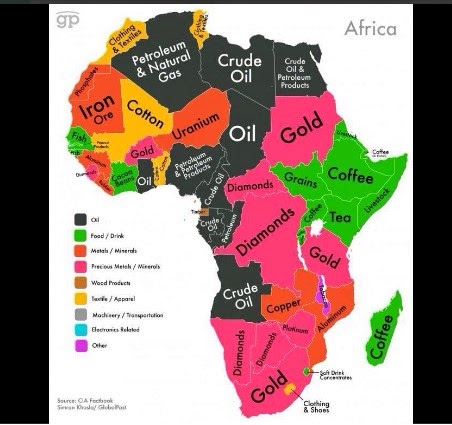
Gulen Schools Worldwide, Why so many Gulen Turkish Schools in Africa? oil, diamonds, textiles, coffee, and more
Africa is a continent RICH in natural resources. The Gulen Turkish Businessmen TUSKON have reaped many business exports in the billions from Africa. TUSKON has many offices set up in Africa, plus in the economically hard hit areas Yok Kim Su the Gulen charity group has gained a lot of controls via charity.
Some assortment of Turkish Gulen Schools in Africa
Some assortment of Turkish Gulen Schools in Africa
 |
| Somalia Turkish School - Nile Turkish School of Somalia |
 |
| Ghana Turkish School Universiteti Beder |
 |
| Madagascar Turkish School (COFFEE) |
 |
| Malawi Turkish School |
 |
| Mali Turkish School |
 |
| Somalia Turkish School- Willow International School |
 |
| Ghana Turkish School |
Wednesday, July 23, 2014
Turkish investor linked to Gulen Schools in Zimbawae swindled out of $100K
https://www.newsday.co.zw/2014/07/22/turkish-investor-swindled-100k/
 This Gulen Educational fund in Zimbawae Africa uses SAME name as the Horizon Schools in Ohio, Illinois
Turkish Schools in Zimbawae
A TURKISH investor, Yuksel Bayrak, was allegedly swindled of over $100 000 in a fraudulent land deal by local prominent business people in a matter that has sucked in the University of Zimbabwe (UZ) and stirred a nasty diplomatic tiff between Harare and Istanbul.
CHARLES LAITON
Bayrak, who is Horizon Educational Trust director, was allegedly duped into buying a non-existent piece of land for the construction of a primary and secondary school by businessman Louis Chidzambwa and chairman of the Harare West Development Trust Michael Mujeyi.
Bayrak is regional representative of the Confederation of Businessmen and Industrialists of Turkiye, Tuskon and also a representative of Turkey’s biggest non-governmental organisation, KimseYok Mu, accredited by the Economical and Social Council of the United Nations (ECOSOC).
Chidzambwa and Mujeyilast week appeared before Harare magistrate Donald Ndirowei charged with fraud and were remanded out of custody to August 26 on $500 bail each.
Allegations against the two men are that in early 2012, Bayrak met Mujeyi after he was introduced to him by one Marah Hativagone, former president of the Confederation of Zimbabwe Industry (CZI).
The State alleges Hativagone told Bayrak that Mujeyi could assist him in obtaining a piece of land to build primary and secondary schools in the Westgate area.
Chidzambwa and Mujeyi, it is alleged, took the Turkish investor to Stamford and Goodhope Farms owned by Duncan Lawrence Annott along Lomagundi Road in Harare where they asked him to choose from two pieces of land measuring 20 hectares each and he chose one at Goodhope Farm.
The two men then asked Bayrak to pay $50 000 for the land and $10 000 to Mujeyi for facilitating the deal.
Mujeyi, it is alleged, then produced a document he titled “Proposed Funds Disbursement Plan” and promised that the agreement and title deeds for the land would be ready in two months.
Bayrak, it is alleged made the payment through the two men’s personal accounts between September 12 and October 19, 2012.
The State alleges, early March last year, Chidzambwa and Mujeyi again approached Bayrak and told him the land needed to be surveyed first before any development took place.
They asked him to pay $40 000 into the UZ’s Department of Geo-informatics and Surveying to facilitate the land survey to which he allegedly complied on March 5 last year.
The alleged offence came to light on May 24 this year when Bayrak made follow-ups and Arnott informed him that the land in question had never been put up for sale.
Subscribe to:
Posts (Atom)