Gulen Schools Worldwide

Gulen Schools Worldwide
Restore the Ottoman Caliphate. Disclaimer: if some videos are down this is the result of Gulen censorship which filed a fake copyright infringement to UTUBE.
Showing posts with label FETO. Show all posts

Thursday, September 6, 2018

Turkish MIT and Moldova police REMOVE 6 Gulenists from country to face justice in Turkey #SerceGokhan

Turkish Secret Services Nab Six 'Gulenists' in Moldova

Moldovan and Turkish intelligence services on Thursday detained six Turkish nationals working for a private chain of high schools in Moldova that is linked to exiled Turkish cleric Fethullah Gulen.   GULENIST Serce Gokhan TEACHING IN AMERICA taught at this school in Moldova click here Serce Gokhan click here
Madalin Necsutu

BIRN
 Chisinau
President Igor Dodon met the Turkish president Recep Erdogan on Ataturk International Airport on March 18 in Istanbul. Photo: Igor Dodon`s Facebook page
Turkish pro-government media on Thursday said the Turkish intelligence service, the MIT, had participated in the detaining of six Turkish nationals that morning in Moldova and had taken them into an unknown direction.
All six were teachers or students at the Horizont Turkish high-school private chain, which is seen as close to the exiled Turkish cleric Fethullah Gulen. One was only 14 years old, but he was shortly released.
"They were taken this morning, but my son and his professor were released. But another professor was taken after they broke down his door,” the father of the teen said.
He added that he feared that the others would be sent to Turkey on the first flight from Chisinau.


MOLDOVA |

Alleged footage where Turkish educators affiliated to Gulen Community are detained in Moldova to be extradited to Turkey at the request of Erdogan Administration.
The detainees were named as Riza Dogan, director of the Durlesti branch of the Horizont school network, Hasan Karacaoglu, deputy general manager, Yasin Ozdil, responsible for public relations at the same school, Ahmet Bilgi, director of Ciocana branch of the school chain and Feridon Tufekci, director of the Ceadir-Lunga branch of the network.
Moldova's secret service, the SIS, stated that it had conducted an operation designed to prevent threats to national security in several localities. The actions were carried out by the SIS Antiterrorist Center.
However, Turkish media claimed it was their own intelligence service, the MIT, that carried out the detentions. "The MIT, which earlier dealt a major blow to FETO’s Balkan branch [Kosovo] ... is now conducting an operation in Moldova," a Turkish media outlet reported.
Turkey routinely styles Gulen supporters as members of the "FETO", the Fethullah Terrorist Organisation.
Turkey's government has vowed to track down and bring home people it sees as linked to Gulen. The Ankara government blames the exiled cleric for a failed coup in Turkey in 2016.
Turkey has also put countries in the Balkans under strong pressure to close down any educational or charitable institutions linked to Gulen.
On March 31, Turgay Sen, a Turkish national and director of the Horizont high-school private chain was detained without explanation by the SIS.
Sen was accused of financing terrorism and banned from leaving the country for 10 days, until April 10. He was released after he filled in a request for political asylum in Moldova to avoid extradition or rendition to Turkey.
Less than two weeks before Sen’s arrest, Moldovan President Igor Dodon announced that he had met his Turkish counterpart Recep Erdogan at Istanbul airport on March 18, and had talked about Turkey repairing the Presidency building in Chisinau, which was damaged in the street riots on April 7, 2009, which toppled the then Communist-led government.
Erdogan was expected in Moldova on August 27 on the National Day of Moldova to open the new Presidential Palace, but the ceremony has been postponed to October.
Dodon said on Wednesday on a TV political show that he expected the Turkish President for the grand opening.
There are five Horizont high schools in Moldova. The educational institution opened in 1993. They host 1,691 pupils and employ about 376 staff from Moldova, Turkey and Albania.
Kosovo and Bulgaria have both returned suspected “Gulenists” to Turkey despite sharp criticism from rights organisations, and sometimes from the EU.
In April, the European Union criticized Kosovo for deporting six Turkish alleged foes of President Recep Tayyip Erdogan, saying it raised questions about Kosovo’s respect for human rights. The deportations on March 29 were approved by Kosovo’s interior minister and intelligence chief, prompting their dismissal by Kosovo Prime Minister Ramush Haradinaj, who said the officials had acted without his permission. The deportees allegedly had ties to the Gulen movement, which Turkey calls the “FETO terrorist movement”.
In October 2016, Bulgaria returned to Turkey at least six people who were allegedly linked to Gulen networks. Border police found them in Ruse, on the border with Romania, where they had attempted to cross over. After all of them claimed asylum, they were told that they would be taken a refugee centre – but the vehicle took them instead to the Turkish border.
Turkey has continued to pressure Bulgaria over the same issue, however. Turkish Interior Minister Süleyman Soylu recently reportedly asked his Bulgarian counterpart to check 14 organizations and schools where Turkey suspects Gulen supporters work.
In Macedonia, meanwhile, a court in August 2017 fined a dual Macedonian-Turkish citizen, a suspected Gulen supporter, for insulting Turkish President Erdogan on Facebook. Turkish Ambassador Tulin Erkal Kara hailed the court victory, which fined the accused 24,600 Macedonian denars [$4,600], saying it set an example. “All Turkish missions, agencies here carry out a serious struggle against FETÖ traitors and we managed to restrict their activities and this insult case helped us to silence

more here https://www.al-monitor.com/pulse/originals/2018/09/turkish-teachers-detained-moldova-gulen.html
http://www.balkaninsight.com/en/article/six-turkish-professors-detained-by-moldovan-secret-services-09-06-2018

Sunday, February 11, 2018

Mysterious deportations of Key Gulenists worldwide: Finland, Malaysia, Sudan, Kazakhstan, Pakistan, Finland, Iraq, Myanmar....more #Hizmet

Gulen members like to refer to key Gulen members as "Kidnappings" "Deportations" but the truth is, the host countries where they are living and robbing from are arresting them, and in a few cases the Gulenists are fleeing and missing. 
This blog has documented these odd disappearances, being a member of Gulen Movement is a casualty.  The smart members of Hizmet are fleeing with as much cash as they can, before they are arrested in their host country.  There is more that we don't know this is just the tip of the iceberg
Latest Article from Hizmet paper:


http://hizmetnews.com/23892/mysterious-deportations-turkish-teachers/?utm_source=feedburner&utm_medium=twitter&utm_campaign=Feed%3A+HizmetNews+%28Hizmet+News%29#.Wn_2F6inGM8


An unexpected flurry of activity took place inside a house in Lahore’s Wapda Town on September 27, 2017. At the unearthly hour of 2:25 am, about 12 men in plain clothes barged in, got hold of the people living inside, covered their heads, bundled them into a car and sped away. Those abducted included Mesut Kacmaz, a Turkish citizen living and working in Pakistan as a director at the PakTurk International Schools and Colleges, his wife and two children.
When his fellow director Orhan Agyun got the news, he immediately contacted his friends in the neighbourhood. Soon he filed a petition at the Lahore High Court for the recovery of the Kacmaz family through AGHS Law Associates, a Lahore-based firm headed by Asma Jahangir that specialises in human rights cases. The petition stated that those taken away feared being deported to Turkey where they might face imprisonment and persecution. It also said that the United Nations High Commission for Refugees (UNHCR) had duly registered Kacmaz and his family as asylum seekers who, after leaving Pakistan, did not want to go back to Turkey but to a destination where they could be safe. The registration had qualified them, under various earlier court orders, to stay in Pakistan till October 2017, the petition added.
On October 6, the court ordered that the family could not be deported. Justice Shams Mehmood Mirza, who heard the petition, told the federal interior ministry to put their names on the Exit Control List and find out who had abducted them. On October 14, Kacmaz’s colleagues informed AGHS Law Associates that he and his family had already reached Turkey. He is lodged in a jail there along with his wife, says Usama Malik, a lawyer representing him and his family. Their children are staying with their grandparents, he says.
Justice Mirza was furious when he was informed about it. On October 17, he sought an explanation from the interior ministry as to how Kacmaz and his family had been made to leave Pakistan in spite of his orders against their deportation. The ministry told the judge that it had no record of their departure from airports in Lahore and Islamabad.
Asim Khan Qaimkhani, additional director of immigration at Jinnah International Airport, Karachi, also verifies that no Turkish family was forcibly deported from Karachi either. Otherwise, he says, his department would have been notified. “If they left, they left willingly.”
The mystery of the family’s departure deepened as reports started circulating that Turkish police came to Pakistan and took them back on a chartered plane. When the court came to know about these reports, it ordered the Pakistan Civil Aviation Authority to find out when and from where the chartered plane had flown them out of Pakistan. The authority later said it had no knowledge or record of the arrival and departure of such a plane.
Four middle-aged Turkish men sit in a newspaper office in Lahore in the middle of December 2017. They are visibly tired and worried — and reluctant to divulge their names. Two of them have received 10-year visas for the United States and have plans to leave Pakistan soon. The other two – and 12 more people like them – cannot even apply for a foreign visa since their passports have expired and there is no way that they can get them renewed by Turkish authorities.
They will have to find a way to stay in Pakistan until their applications for asylum to countries in Europe or North America are accepted. They are willing to try any options to get out of Pakistan — whether it is through the United Nations or through human smugglers. “That is how distressed we are,” says one of them. They are also bitter about how they are being treated. “The [previous] president of Turkey – Abdullah GÜL – visited our schools. Now we are considered terrorists,” says another.
He finds it worrisome that no voices have been raised by political parties in Pakistan over their mistreatment, even when they see Pakistan as their second home. One elaborates, “One of my kids was born in Quetta and the other in Lahore. They are Pakistani you can say. My kids ask me, ‘Why are Pakistanis … forcing us to leave our home?’” All four let out nervous laughter when asked if they expect any change in the attitude of the Pakistani government towards them. “The Turkish government has given so much to Pakistan. I don’t think politicians, even the opposition, would risk that. Why would they care about a few teachers?”
Trouble for the PakTurk schools and colleges and their Turkish teachers and managerial staff started after an alleged coup attempt against Turkish President Recep Tayyip Erdogan failed in July 2016. The coup was said to be backed and orchestrated by Fethullah Gülen, a Turkish preacher living in the United States where he heads a foundation called Hizmet (service). It owns and operates media organisations, educational institutions and non-profit associations both in Turkey and among Turkish migrants in other countries. Turkish authorities in Ankara allege that the PakTurk International Schools and Colleges are also a part of Gülen’s network. They, therefore, wanted Pakistani authorities to close down these educational institutions and deport their Turkish staff.
Around 110 Turkish teachers, residing in Pakistan with their families, consequently received no positive response from Pakistani authorities on their annual visa renewal applications, says Agyun. For the previous 21 years – since 1995 when PakTurk International schools and colleges started operating in Pakistan – they have been getting their visas renewed without much hassle.
The situation became even worse when Erdogan arrived in Islamabad on an official visit on November 16, 2016. The same day, the interior ministry told all Turks working with the PakTurk educational network to leave Pakistan within three days.
To preempt any disruption in academic activities, Agyun and his senior colleagues in the management took some immediate measures. They started replacing Turkish teachers with Pakistani ones and posted an announcement on the website of their organisation: “We feel it imperative to clarify that the PakTurk International Schools and Colleges in Pakistan are a philanthropic and non-political endeavor in the country organised and established for human development, inter alia, in the field of education for the benefit of all Pakistanis … We are deeply concerned by allegations made by a certain section in the social media trying to connect the PakTurk International Schools and Colleges in Pakistan with Mr. Fethullah Gülen or the political movement ascribed to him in wake of the recent unfortunate and reprehensible events in Turkey. We do unequivocally clarify that the PakTurk International Schools and Colleges in Pakistan have no affiliation or connection with any political individual or any movement or organisation, whether political, religious or denominational, nor do we have a financial relationship with any movement.”
Their third step was to move courts to prevent deportations. While the Islamabad High Court dismissed their petition and instead told them to approach the interior ministry for an extension of their visas, the Peshawar High Court halted the deportations through an order on November 23, 2016. Another positive development for them was a verdict by the Islamabad High Court in March 2017 that declared that the state had made no decision to take over educational institutions owned and operated by their organisation.
Turks working with the PakTurk International Schools and Colleges, in the meanwhile, were flocking to the offices of the UNHCR in Islamabad. Though Pakistan is not a signatory to the international conventions on refugees and asylum seekers, according to lawyer Malik, it is obliged under international law to refrain from deporting any foreigners living here if they have already registered as asylum seekers with the United Nations.
This certainly did not help Kacmaz and his family.
The main campus for boys run by the PakTurk International Schools and Colleges in Lahore is situated on Lahore’s Raiwind Road. Built over a decade ago, it has a state-of-the-art building with an indoor Futsal court and an auditorium that can accommodate 500 students. In 2006, General Pervez Musharraf conferred a civilian award on the PakTurk International Schools and Colleges, recognising their services to Pakistan.
One early morning in December 2017, the school’s principal, Asif Raja, is running through meetings while tending to a cell phone that is constantly ringing. He is overseeing preparations for a math competition involving over 11,000 students from across Pakistan. “What these [Turkish] teachers brought [here] was quality education and international exposure. They had taught in various countries and were role models for students,” he says. “[Their deportation order] was really shocking for us,” he adds. “We never saw anything controversial or suspicious [about them].”
Local teachers and managers are running the campus now, as they do at all 28 campuses of the PakTurk educational network located in Islamabad, Lahore, Quetta, Peshawar, Khairpur, Multan, Jamshoro, Hyderabad and Rawalpindi. About 12,000 students are enrolled at these institutions.
At one of them, in Karachi’s Gulistan-e-Jauhar area, Haseebullah Jogi is conversing in Turkish over the phone in the principal’s office on a mid-December day. A Turkish flag stands to his right and a Pakistani one to his left, along with framed photos, hanging side by side, of Muhammad Ali Jinnah and Mustafa Kemal Atatürk. The school’s official motto – “We believe that what is taught with love lasts forever” – is visible everywhere: on promotional brochures, newsletters and other merchandise.
Jogi took over as principal not too long ago. As part of the plan to replace the Turkish staff with locals, he was transferred here in August 2016 from the Khairpur campus where he was working as vice principal. He himself is a 2009 graduate of the PakTurk International Schools and Colleges and has studied physics at Istanbul University on a scholarship. “Nowhere in our school system are we teaching about Fethullah Gülen. He has no connection [to] our schools,” says Jogi.
By early October 2017, most Turkish teachers had left Pakistan. Those who could not were worried, according to Jogi, “because going back [to Turkey] meant they would be imprisoned”. And once in Turkey, they would also find it impossible to apply for asylum elsewhere, explains a human rights lawyer.
In order to avoid being deported, they had moved the Sindh High Court which, on October 3, extended its earlier injunction against their deportation to October 10. It was later extended again to December 5.
Only a couple of families now live in Karachi – and a few more in other cities – but they are also planning to leave. They have little choice, according to Jogi. “They have lost their livelihood in Pakistan … because their visas have expired.”


What country will be next? Which Gulenist will flee and end up MIA?  


Monday, December 25, 2017

FETO schools in Chad taken over by Maarif Foundation

Chad's Education Minister Ahmad Khazali Acyl speaks during the ceremony to hand over Gülenist schools in Chad to Turkey Maarif Foundation in N'Djamena, Chad, Dec. 25, 2017. (AA Photo)


 Chad's Education Minister Ahmad Khazali Acyl speaks during the ceremony to hand over Gülenist schools in Chad to Turkey Maarif Foundation in N'Djamena, Chad, Dec. 25, 2017. (AA Photo) A Turkish state-run education foundation has taken over schools in Chad that once belonged to the Gülenist Terror Group (FETÖ), the group behind last year's defeated coup in Turkey, ahead of an official visit by Turkish President Recep Tayyip Erdoğan. Turkey's Maarif Foundation took over the institutions in line with a protocol signed between the Turkish and Chadian governments on Sunday. Among these institutions are a kindergarten, a primary school, two secondary schools, two high schools, and a dormitory. The institutions will continue operating with administrators and teachers sent by Maarif. In a speech, Turkey's Ambassador to Chad Erdal Sabri Ergen thanked the heads of Maarif. "These schools will greatly contribute to Chad's education system," he said Speaking to Anadolu Agency, Chad's Education Minister Ahmad Khazali Acyl said that the school transfer was an important step in relations between the two counties. On Sunday, Erdoğan said in Ankara ahead of his three-day visit to Sudan, Chad, and Tunisia that Turkey was determined to clear Africa of FETÖ, the group behind last year's defeated coup in Turkey. Saying that FETÖ fooled people through "sham" education and aid services, Erdoğan added: "Many African countries, immediately after the coup attempt, deported FETÖ members and transferred the schools run by the group to our Maarif Foundation." The Maarif Foundation has recently assumed control of numerous schools previously run by FETÖ around the world, including 32 in Africa, according to Turkey's National Education Ministry. FETÖ and its U.S.-based leader Fetullah Gülen orchestrated the defeated coup attempt of July 15, 2016, which left 250 people martyred and nearly 2,200 injured.

Monday, February 27, 2017

Afghanistan Gulen Schools transferred to Turkish Government controls what about the Heroin trade?

Afghanistan initially opposed to Turkey’s demand to shut down the schools, but couldn’t resist Ankara pressures, according to sources.
Thumbnail
Afghanistan president Ashraf Ghani has agreed to hand over the Afghan-Turk school, run by a pro-Gulen institution, to the Turkish government.

Currently six Afghan-Turk schools are operating across Afghanistan where over 8000 students, including girls, are enrolled.

Because of the new agreement, some 150 pro-Gulen Turkish teachers will be expelled from Afghanistan after the handover which is expected to happen soon.

The schools are in Kabul, Mazar-e-Sharif, Herat, Kandahar, Jalalabad and Sheberghan cities.

Afghanistan initially opposed to Turkey’s demand to shut down the schools, but couldn’t resist Ankara pressures, according to sources.

The schools will remain open, but run by an institution directly operated by the Turkish government.
http://www.tolonews.com/afghanistan/afghan-turk-schools-will-operate-under-turkish-govt#GulenAfghanistan

Monday, January 16, 2017

Does Daesh protect FETO Gulen Schools in Mosul?

The Iraqi forces captured southwestern Mosul, Iraq, from Daesh after three months of clashes. Iraqi forces, supported by the U.S. and Shiite Hashdi Shabi group, yielded results much later than expected, claiming southwestern Mosul three months after the launch of the offensive.

Iraqi forces engaged in clashes for seven days in the Hayl Zubbat town before capturing southwestern Mosul.

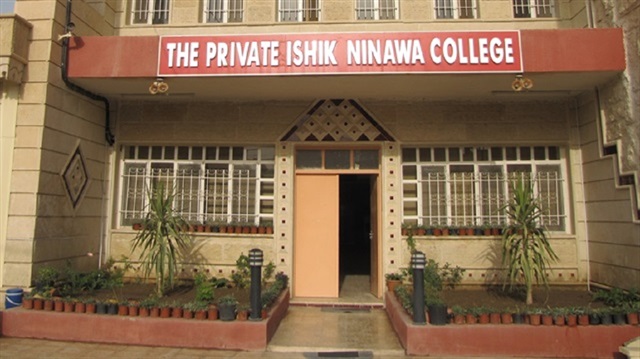
Hussein Kasim Amiri, an Iraqi commander, reported upon capturing the city, he was suprised to see that Ninawa Ishik College, a school linked to the the Fetullah Terrorist Organization (FETÖ), was untouched.

“We captured the city, we analyzed each area carefully. While searching for the Daesh terrorists we thought could be hiding in houses, we came across the most protected area, the Street the FETÖ school was on," said Amiri.

On our maps, it showed that the school was here in 2012 and we had just assumed that it had been burnt or harmed. When we went to the school we saw that it hadn't been damaged at all. The school's signage and equipment was intact. We were all shocked."

Military sources have reported that Daesh does not allow the use of any alphabet other than Arabic. Ninawa Ishik College, which is located 2 kilometers away from Daesh's security center, has signs and colourful writing on the walls written in English.

It is not yet known why Daesh, who destroyed the Mosul Museum and put the Daesh symbol all over the historical Mosul University and all primary schools, did not inflict any damage upon Ninawa Ishik College.

Residents of the Hayl Zubbat town said that Ninawa Ishik College shut down for three months when Daesh first captured the city, before four people came and opened the school. Residents also reported that they believed Daesh intelligence operations were conducted in the school, and that people coming in and out of the school were transported by private vehicles.

FETÖ terrorists are led by U.S.-based Fetullah Gülen, who orchestrated Turkey's July 15 coup plot and is the mastermind behind a long-running campaign to overthrow the state through the infiltration of Turkish institutions, particularly the military, police and judiciary.
http://www.yenisafak.com/en/world/feto-is-protected-by-daesh-in-mosul-2597415

Monday, November 7, 2016

Gulen Turkish Schools in India, Turkey's Government asked to be shuttered


ew Delhi, November 4


Turkey has asked India to shut down schools linked to Fethullah Gullen — the second time the country has made such a request in its attempt to bring down the cleric it accuses of masterminding July’s failed coup.


Turkey’s Development Minister Lutfi Elvan — currently on a state visit to India — said after his meeting with Home Minister Rajnath: "Unfortunately, in India too this terrorist organisation has organised themselves. They (the Fethullah Gulen Terrorist Organisation) have got four schools, one international school and a college and they are organised in Delhi, South Delhi, Hyderabad and Kolkata. During our meeting we also had the opportunity to discuss this with Minister (Singh) about the preventive measures to be taken against this terorist organisation," Lutfi said.


Turkey's crackdown since rogue soldiers tried to seize power on July 15 has alarmed Western allies and rights groups, who fear President Tayyip Erdogan is using the coup attempt to crush dissent. More than 100,000 people have been sacked or suspended and 37,000 arrested over the past three-and-a-half months.


Ankara wants the United States to detain and extradite Gulen so that he can be prosecuted for having engineered the coup to overthrow the government. Gulen, a former ally of Erdogan who has lived in self-imposed exile in Pennsylvania since 1999, denies any part in it.  — Agencies


http://www.tribuneindia.com/news/nation/turkey-wants-india-to-crack-down-on-gulen-schools/318725.html


http://www.thehindu.com/features/metroplus/the-turkish-connection/article5368278.ece


http://indianexpress.com/article/world/world-news/feto-infiltrates-india-turkey-all-you-need-to-know-about-fethullah-gulen-terrorist-organisation/